
 +86-20-8551-8689
 export@joydell.com
 GuangDong, China




Technologies
Home
>
News

 2026-04-24
 1847
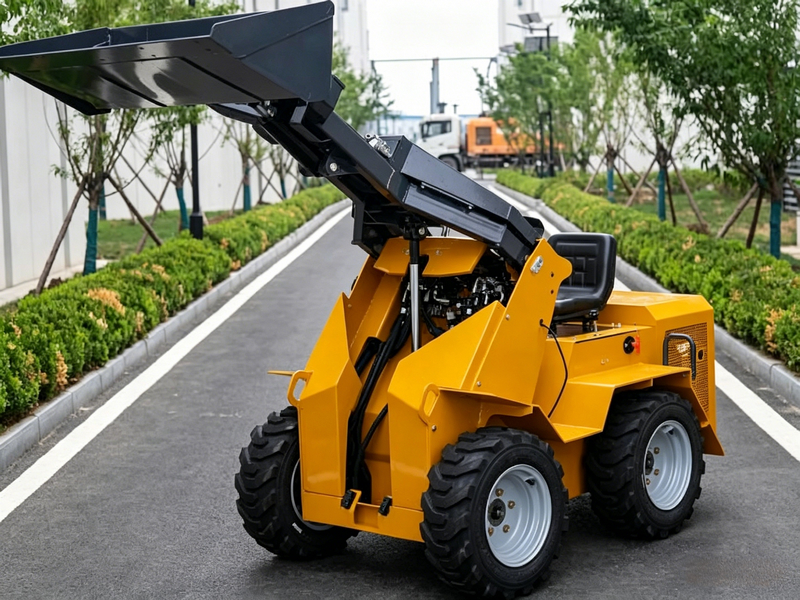
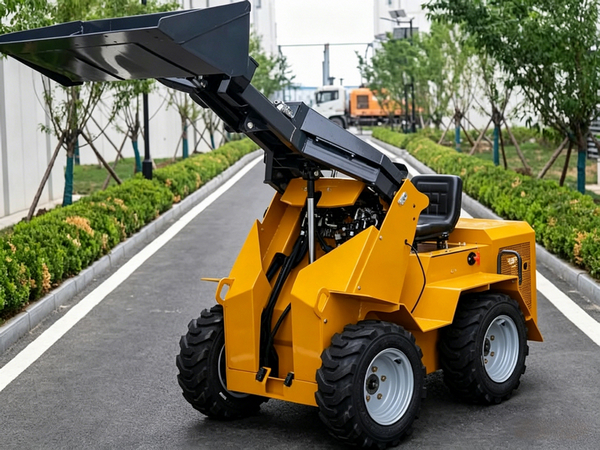
1847Compact loaders are widely used in construction, agriculture, mining, and other work environments, performing a variety of tasks such as loading, unloading, material handling, and auxiliary excavation. Due to complex operating conditions and frequent changes in workload, it is inevitable that various faults will occur during long-term operation. A thorough understanding of common issues and their corresponding repair methods is essential for ensuring stable operation and extending the service life of the equipment.
This article outlines typical faults and key troubleshooting points for critical components, including the engine, hydraulic system, transmission system, braking system, electrical system, and tires.
1. Engine System
Engine malfunctions typically manifest as difficulty starting or a lack of power. Starting issues are often related to low battery charge, starter motor failure, or fuel supply problems. Priority should be given to checking the battery condition, the starting system, and the fuel system’s flow, as well as inspecting and replacing key components of the ignition system.
When the machine experiences a loss of power, common causes include a clogged air filter, insufficient fuel supply, or reduced cylinder compression. Engine performance can be restored by cleaning or replacing the filter, inspecting the fuel pump and filtration system, and overhauling the cylinders and related components.
2. Hydraulic System
Failures in the hydraulic system primarily involve two issues: insufficient pressure and system overheating. Insufficient pressure is typically caused by low hydraulic fluid levels, poor fluid quality, or wear on hydraulic pumps and valves. Hydraulic fluid should be replenished or replaced promptly, and the seals on pumps, valves, and lines should be inspected.
System overheating is often related to poor heat dissipation or excessive load. The cooling system should be cleaned, the viscosity of the hydraulic fluid should be selected appropriately, and prolonged operation under high loads should be avoided to ensure system stability.
3. Transmission System
Common issues with the transmission system include abnormal noises from the transmission, difficulty shifting gears, and oil leaks from the drive axle. These problems are usually related to insufficient lubrication or wear on gears or bearings. Check and replace the transmission fluid, and replace worn components as necessary.
For drive axle oil leaks, focus on inspecting the oil seals and housing structure. Replace aged seals or repair damaged areas promptly to prevent further damage.
4. Brake System
Brake system failures directly impact operational safety. Brake failure is often caused by low brake fluid levels, worn brake pads, or leaks in the brake lines. Brake fluid should be topped off or replaced promptly, and the condition of the brake pads and lines should be inspected.
If unusual noises occur during braking, check for foreign objects or uneven wear between the brake pads and rotors, and clean or replace them as necessary to restore normal braking performance.
5. Electrical System
Problems with the electrical system primarily manifest as short circuits, open circuits, or functional failures. Common causes include aging wiring, blown fuses, or faulty switches and relays. Conduct a systematic inspection of the circuitry and promptly replace any damaged components.
For abnormalities in the lighting system, focus on inspecting the condition of bulbs, switches, and wiring connections to ensure good electrical contact and guarantee safe nighttime operation.
6. Tire System
Tire issues primarily include air leaks and uneven wear. Air leaks are typically caused by punctures from foreign objects or damaged valves; tires and valve stems should be repaired or replaced promptly.
Uneven wear is often related to abnormal tire pressure or misalignment; tire pressure should be adjusted and front-wheel alignment corrected to extend tire life and improve driving stability.
7. Routine Maintenance
Proper routine maintenance is an effective way to reduce the occurrence of malfunctions. Regularly check the levels of various fluids and replace them according to the schedule; keep the equipment clean to prevent corrosion and blockages; and inspect critical fasteners to ensure secure connections.
In addition, moving parts should be lubricated regularly, tire condition should be checked, and a reasonable maintenance plan should be developed based on the equipment’s operating conditions. For complex malfunctions, repairs should be performed by qualified professionals to avoid further damage caused by improper handling.
The stable operation of compact loaders depends on proper usage and scientific maintenance. By systematically understanding common faults and their solutions, and by implementing daily maintenance measures, you can effectively enhance equipment reliability and operational efficiency, providing continuous and stable support for various construction scenarios.



 +86-20-8551-8689
 +86-20-8551-8689
 +86-189-3986-2805
+86-139-5926-1266
+86-159-5923-7232
+86-189-3986-2805
+86-139-5926-1266
+86-159-5923-7232
 Suite 2106, Hanyin Building, Financial City, Tianhe District, Guangzhou, Guangdong Province, China